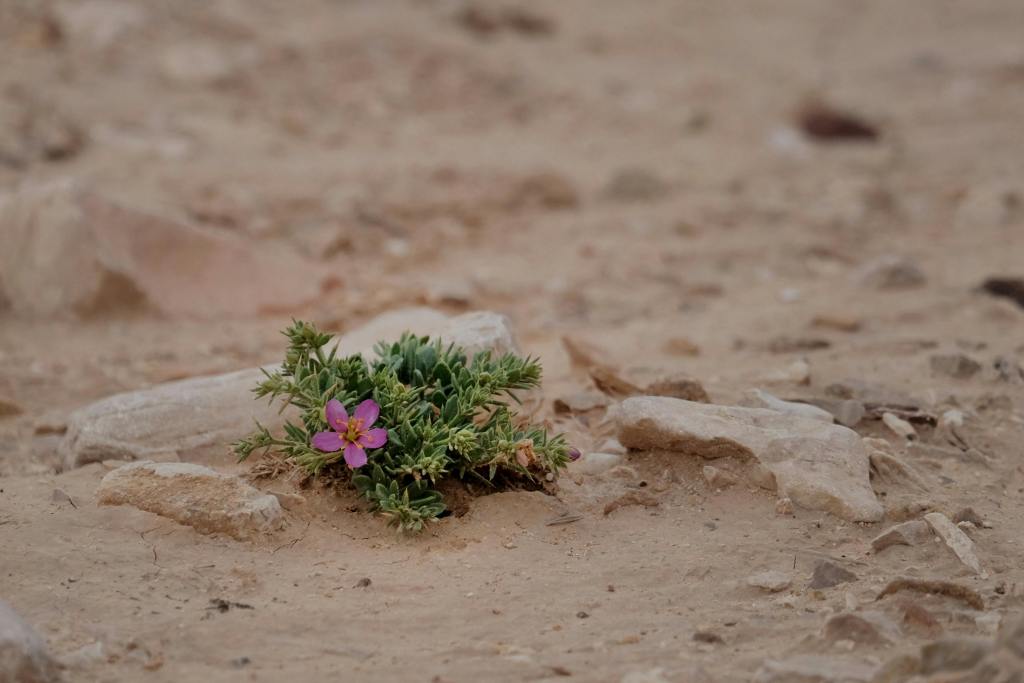
After living in my adopted country for more than 20 years, I sometimes feel more at home in China than I do the U.S. Comfort is nice, even good, but has its drawbacks. Familiarity with the people, society, and situation causes me to rely too much on my own understanding. On the other hand, when I’m uncomfortably unable to rely on myself, Jesus’ power is perfected in my weakness.
I was reminded of this truth recently when I made a visit to a different country. I’d been there before to facilitate some teacher workshops. In fact, over a seven-year period, I spent roughly the equivalent of four months in the country. A few months spread out over almost a decade, however, hardly makes me an expert in their diverse culture. Moreover, although I had gained a rudimentary understanding of their approaches to education, on this visit, I was teaching from the Word at a camp for mostly young adults.
I prepared. Carefully. When I’m training teachers, I work from an outline of explanations and activities. If the students and situation are new or the timing is tight, I might practice, especially the transitions or parts where I’m doing most of the talking. However, usually when the topic is familiar, I could almost teach “with my eyes closed.” In this case, I wrote out word for word what I would say and do. Then, I practiced. More than once. In fact, I spent so much time on the airplane going through my notes with my Bible open that a fellow passenger asked if I was planning to read the whole book before we landed.
Interacting with a few of the young adults and their pastor and his family before the camp gave me an opportunity to learn about my audience. Most who attend their fellowship grew up in the church, but for some, faith has become a set of rules to follow rather than a daily walk with the Shepherd. All of them left their villages in another part of the country to pursue a better life in the capital. Some will succeed; others will fail and have no recourse but to return home where opportunities are few. This background information helped me tweak my notes. Still, no amount of practice or research could prepare me for an unfamiliar situation and unknown students.
I felt weak. I was weak. Now looking back, I see how my word-for-word notes interfered with my ability to read my students. Moreover, even though my audience was large, my default to mostly lecture during sermons might not have been the best choice given my teaching style and their needs. The Q & A session felt like a bit of a disaster. I thought they’d ask personal questions about my faith or life. They asked theological ones about some rather difficult topics. And those questions continued over meals. No matter which table I randomly chose to join, my meal mates seemed to be competing to see who could ask me the most difficult question. At other times in private conversations, people needed a counselor, not a teacher.
In my weakness, I was comforted by a memory from my days as a Chinese language student. Some classmates and I got into the habit of attending a local church. Invariably, every Sunday on the bus ride home, one of us would say, “I think the pastor was preaching that sermon directly to me.” And everyone else would agree. The pastor was charismatic and obviously well-prepared. He also skillfully communicated clearly for all the members of his flock, including those who could understand his spoken words but could not read and others who were partially literate non-native speakers like my classmates and me.
Yet, no one is capable of designing a sermon that speaks to every heart no matter the labor invested. No human is capable. Even our most glorious endeavors are soiled rags. But on the carcass of our efforts the Spirit breathes. His grace is sufficient. His marvelous works flourish in our weakness.
Sorting through my memories of camp, I hear again the words of a few who found encouragement in my presence. They had ears to hear and humbly learned by listening and observing.
- What you said about idols spoke to me. I think my job pursuit is an idol.
- You’re right. Looking for underlying principles in our Bible study before applying is important.
- I’ve always wanted to know how to study the Bible, not just read it. The method you taught is very helpful.
- The fact that you are an introvert gives me hope that I can learn to balance time alone and time with people who need the Good News.
- My favorite part of camp was your sermons.
Even more, I see their faces. The longing to trust Jesus fully. The sincere and humble desire to learn. The joy as they lifted their hands and danced in worship. Words that might seem trite coming from the mouth of someone who has little understanding of what it means to be marginalized or oppressed rang with truth on their lips.
God is good
all the time.
All the time,
God is good.
And I, rich with a lifetime of opportunity, whose background has opened rather than closed doors, was convicted of my weakness. Then, by His power, we stood shoulder to shoulder encouraged, inspired, changed.


 Water for the Weary
Leave a reply to kentonkeithsmith Cancel reply