A drive through my Chinese province affords a clear picture of life on the edge of the Gobi Desert. Swaths of sandy ground stretch out toward a border of brown, craggy mountains. On windy days, billows of dust obscure the normally blue skies. During planting season, women and men engage in the backbreaking work of turning brown earth to the green of vegetables. Their labor is mostly done with scarce water and without the aid of machines. As my vehicle passes, I feel their sun-baked dusty skin, the dryness of their mouth, and their gritty eyes.
In the middle of the barren lands live two families I’ve known for years. While their children made their way through school and into the workforce, I have attempted to encourage and support them. The families are better off—I think—as a result. Outwardly anyway. I’m not so sure about their hearts.
On a trip to visit my friends in the barren lands, I sit in one home in a newly built room that blooms with color. A sink with running water and stove with piped in gas are incorporated into green and red cabinets. Mom, daughter, and the four older grandchildren work like a team—setting before me a bounty of colorful dishes that match the cabinets. They urge me to eat, and continuously pour water into my huge cup where green tea leaves float beside dried dates. Mom’s smile is bright as we snap a few photos together.
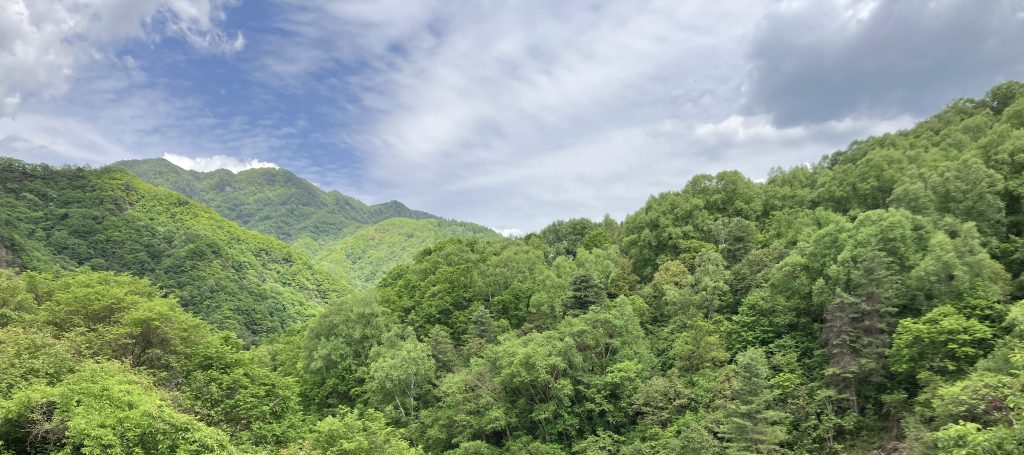
After a visit to the other family’s home, I add a day of vacation to the trip and travel on to another corner of my province. The difference is striking. Craggy, brown mountains give way to lush green ones. The trees are so thick that finding a good mountain view is difficult, and when one is found, it’s scalloped by verdant treetops. A river begins in these mountains and winds its way down to the valley, leaving an oasis in its wake that stands in sharp contrast to the surrounding desert.
On the way home, as lush green mountains give back ground to desolate ones, I see a parallel to people’s hearts which seem as hopelessly barren as the surrounding earth. My friends’ economic condition has improved, brightening their outlook. Their children have married and now have children of their own, creating a 幸福的家庭,1 a happy family. But does their improved situation only make them less likely to look to the One source of joy and peace? Have I done them a disservice by helping in some small way to make their lives easier while their hearts remain as craggy and dry as the soil they work?
Looking out the bus window at the desolate earth and considering my friends’ parallel hearts, a sense of hopelessness washes over me, “How can they ever change?” I sigh. Then, I look up to the blue sky painted with wispy clouds that point back one hundred kilometers to the lush oasis thriving in barren lands. And my sighs give way to hope: What is impossible for mere mortals IS possible with Majesty!
I say to these desolate mountains, “Move! Run with water from an ocean of Love! Break free from barren death to verdant Life! Bloom with a harvest one hundred times the paltry seeds I’ve sown!”
Amen.
- xingfu de jiating ↩︎


 Water for the Weary
Leave a reply to Springboard to Eternity – Water for the Weary Cancel reply